
A New Leaf (1971)
The Underrated Comedy Classic Directed by Elaine May

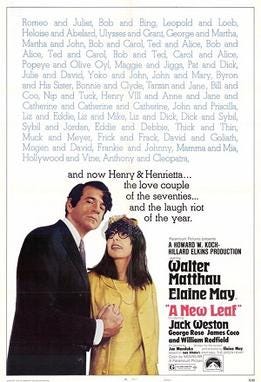
Every once in a while, you watch a film that really smashes your expectations in terms of how good it’s going to be. For me, most recently, it was Elaine May’s directorial debut A New Leaf. She also writes the film and co-stars in it.
I’ll be the first to admit I’d never heard of May before, but it seems like I’m not alone. It seems the director/writer/actress has been underrated and underappreciated for a long time. Only recently (like in the past ten years), does it feel like there are attempts by others to draw awareness, such as Criterion Collection writer David Hudson who said she was a "criminally underappreciated moviemaker” or the Philadelphia Film Critics Circle who created an award in her name given to “a deserving person or film that brings awareness to women’s issues.”
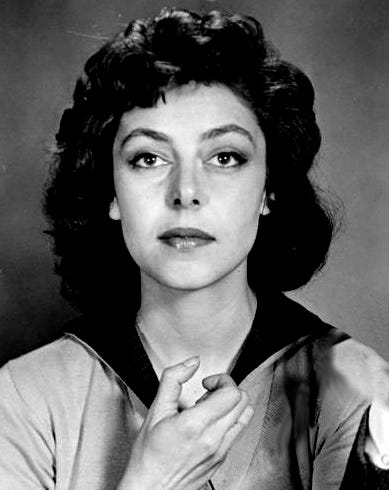
As referenced by the aforementioned award, a large part of May’s lack of recognition comes from May being a woman in a men’s club — in this case Hollywood. It’s not surprising in the least, but it is tragic when you start reading the development of A New Leaf. Though she only meant to write the work, her agent worked with Paramount to have May direct the film for $200,000. Somehow, that number became $50,000, because (at least via Wikipedia) “her agent convinced her that a first time director could not expect such a large sum of money.”
These are the first of several issues regarding production and post-production in the film. There were issues in casting, going longer than scheduled while shooting, and taking ten months to edit the film. Budget was also a concern, with the 1.8 million dollar film ballooning up to 4 million. And, it’s not like the final film was even May’s vision, as exec Robert Evans recut May’s film, shortening the three hour movie to 102 minutes. The film was made money at the box office and was praised by critics, though many mentioned this film shortening in their reviews.
Despite all these murky shadows surrounding May’s work, it’s still a uproariously funny film to watch. The concept is simple, Walter Matthau plays Henry Graham, a ultra-rich and detestable man living on his family’s trust funds, who is told by his attorney he has no more money. Worrying about his future as he has no desire to be poor or work, Henry is convinced by his butler to go find a rich wife, so he can continue being rich. He makes a bet with his uncle, so that he can ensure enough finances to keep himself going for six weeks, but the downside is costly — if Henry can’t find a wife in six weeks, he’ll lose all his material possessions, even his Ferrari.
Thankfully, he finds Henrietta (played by Elaine May), who is as sweet as she is nebbish. Though she’s also inherited a vast fortune and a stately manor, it’s clear that she has no understanding of high society or manners. A professor of botany, she lives her life in a menial way that circumvents the entire idea of being rich. How the two meet exemplifies Henrietta’s character well, as she spills tea on a rug during a gathering, and Henry steps in to “save” her from upper class embarrassment. Though, throughout, Henry is a manipulative bastard vying for Henrietta’s fortune, in spite of himself, he develops feelings for Henrietta and by the end, the film becomes weirdly sweet.
That’s not to say it isn’t filled with black comedy though. Henry regularly contemplates suicide and, later, murdering Henrietta when he can’t deal with her. Despite it highlighting these darker moments, the film always remains funny, often due to Henry being so incorrigible and snooty. His proposal scene in particular is highlights some of the best comedy in the entire film.
What makes the film work — at least in this version, as unfortunately, we’ll never see May’s original vision — is how although May’s character is seemingly socially awkward or “uncivilized” to Henry, Henry is actually the distasteful one. Throughout, it’s clear that despite his ability to put on airs, he’s the one who squandered his wealth and now must resort to slapdash means to maintain it. He can’t resort to others to bail him out, because everyone despises him. It’s also worth noting that Henry isn’t completely inept, as a scene with Henrietta’s servants illustrates, but scenes often show that Henry is just as cloistered and set off from society as Henrietta—just for different reasons.
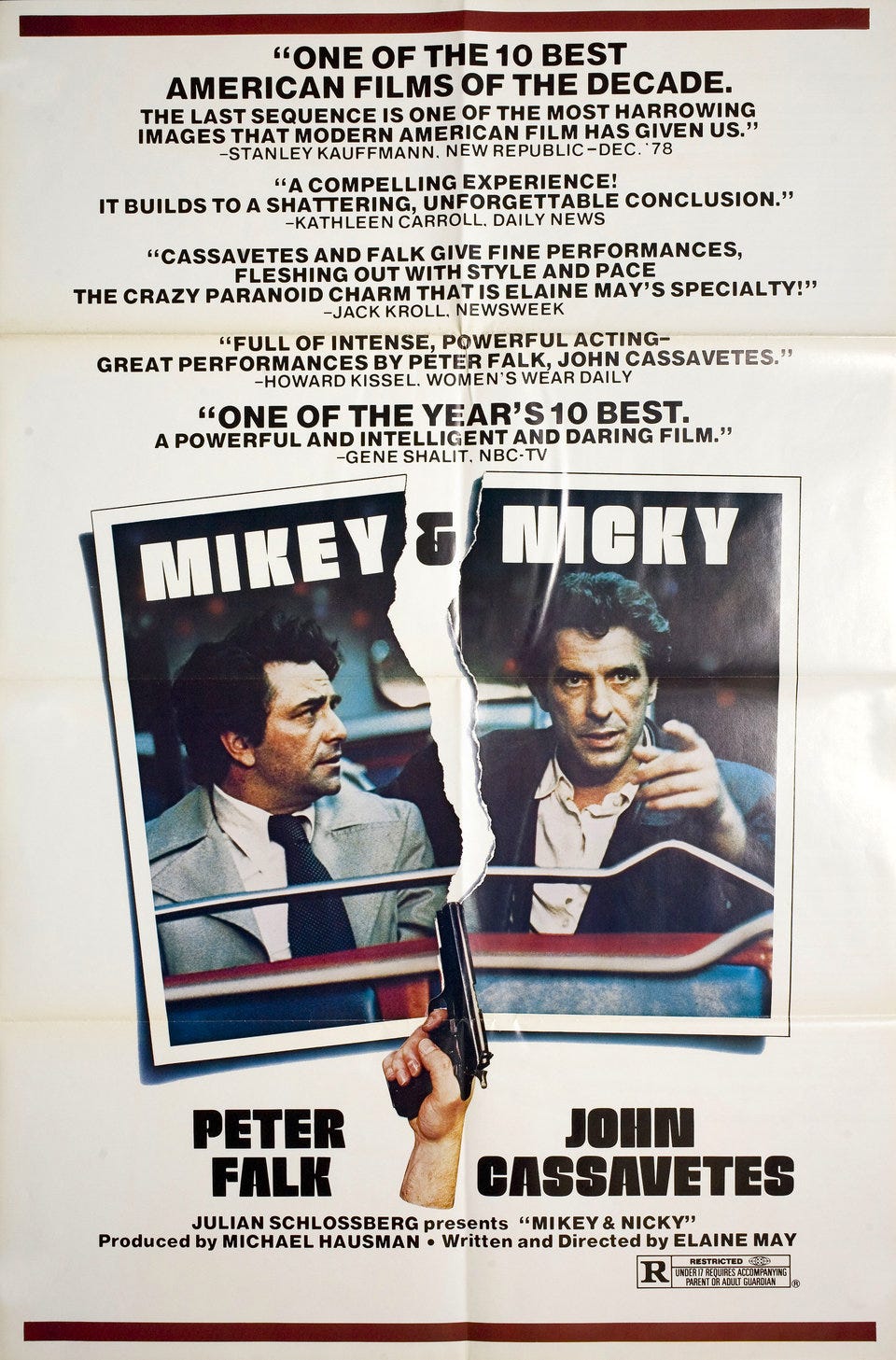
Though May’s debut certainly has an unseemly shadow cast from its purported mishandlings likely driven by misogyny, it’s clear from A New Leaf May has a great deal of talent. Looking at May’s oeuvre, I realized I had actually seen another picture of hers, 1976’s Mikey and Nicky, starring John Cassavetes and Peter Falk. Unfortunately, that one just didn’t have the same appeal to me that A New Leaf does. Unsurprisingly, this may be because of more disagreements between May and the studio and issues while filming. (Seriously, look at the Wikipedia if you have a chance — there’s a point where May hides reels of footage of this film in her garage. It’s wild.)
Anyways, Elaine May is definitely deserving of more praise, and A New Leaf is a perfect example of her clear ability as a writer/director. Check it out if you get the chance. It’s streaming on Criterion Channel right now (or at least it was when I wrote this). I hope you, like me, have your expectations smashed and enjoy an incredibly funny and entertaining film from the early ‘70s.
May also directed one of the most notorious bombs of the '80s, "Ishtar." It was cultural shorthand for" box office disaster" for years, on par with "Heaven's Gate." Here's the thing, though: It's pretty good! Not as good as A New Leaf, but good. Good enough that Gary Larson apologized for mocking it in "The Far Side."